Optical analysis
Comprehensive lab and process optical analysis systems for solids, liquids, slurries, particles and gases
F
L
E
X
Simple products
Easy to select, install and operate
Technical excellence
Simplicity
Standard products
Reliable, robust and low-maintenance
Technical excellence
Simplicity
High-end products
Highly functional and convenient
Technical excellence
Simplicity
Specialized products
Designed for demanding applications
Technical excellence
Simplicity
FLEX selections
Technical excellence
Simplicity
Fundamental selection
Meet your basic measurement needs
Technical excellence
Simplicity
Lean selection
Handle your core processes easily
Technical excellence
Simplicity
Extended selection
Optimize your processes with innovative technologies
Technical excellence
Simplicity
Xpert selection
Master your most challenging applications
Technical excellence
Simplicity
Compare
Laser wavelength
Starter: 785 nm
Spectral coverage
Starter 785 nm: 300-3300 cm-1
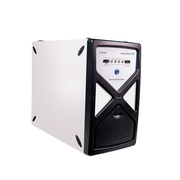
Raman Rxn4 analyzer
Rugged, reliable Raman analyzer ensuring 24/7 process and quality monitoring
Laser wavelength
Base model: 532 nm, 785 nm, 1000 nm
Spectral coverage
Base Model and Enclosure configuration
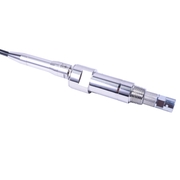
KFOC1B Raman fiber-optic cable
New
Next-generation Raman fiber optics offering enhanced certifications and flexibility to support easier installations
Ambient temperature
Range:
Fiber optic cable
Length: 5000 mm / 196.86 inch (custom lengths available)
Laser wavelength
With non-contact and immersion optic:
Body and window materials
Rxn-10 probe body: 6061 aluminum, 316L stainless steel, and 303 stainless steel
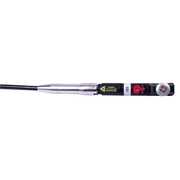
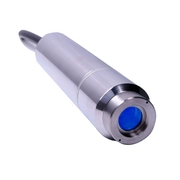
Raman Rxn-20 probe
The no-touch, focus-free solution for Raman lab or process solids measurement
Laser wavelength
785 nm
Body and window materials
Body: 316L stainless steel
Hazardous area certifications
ATEX, CSA, IECEx, UKCA, JPEx
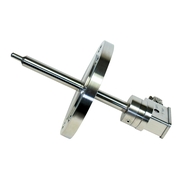
Raman Rxn-30 probe
Providing reliable, quantitative gas-phase measurements in a process environment
Hazardous area certifications
ATEX, CSA, IECEx, UKCA, JPEx
Laser wavelength
Wetted materials
Metal: C276 alloy, 316L stainless steel, or Grade 2 titanium
Hazardous area certifications
ATEX, CSA, IECEx, UKCA, JPEx
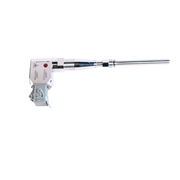
Raman Rxn-41 probe
Offering simplified, reduced cost installation in the process environment
Laser wavelength
Wetted materials
316L option
Hazardous area certifications
ATEX, CSA, IECEx, UKCA, JPEx
Laser wavelength
Wetted materials
Body: 316L stainless steel
Sterilization method
CIP/SIP
Raman Rxn-46 probe
Raman interface adapted and optimized to fit the BioPAT® Spectro platform by Sartorius
Sample interface
Temperature: probe is non-contact; operating temp: 10 to 50 °C / 50 to 122 °F
Do you need help selecting your optical analysis system?
We support you in selecting and configuring best-fit products for your measuring tasks and applications.
About optical analysis for solids, liquids, slurries, particles, and gases
Endress+Hauser has made significant investments in our customers’ futures by offering a comprehensive portfolio of atomic and molecular analysis tools for laboratory, process, and emissions monitoring. Our world-leading optical analysis systems help customers optimize key industrial processes and more reliably monitor product quality and emission in real time. Key extractive and in-situ technologies include tunable diode laser absorption spectroscopy (TDLAS), quenched fluorescence (QF), Raman spectroscopy, NIR, IR, UV/Vis, and atomic absorption.
Process transparency: Data from optical analysis provides transparency in processes, allowing for better decision-makingReal-time measurement: Measurements in seconds or minutes enable users to minimize downtime and control operational costs in industrial processesQuality and reliability: Optical analysis systems help customers optimize key industrial processes and reliably monitor product qualityNon-invasive, hands-free measurement: Inline optical analysis enables safe, efficient, and non-destructive measurement without sample prep or handling High plant availability: High plant availability is achieved through the installation of easy-to-operate and maintain optical systemsCompliance: To minimize emissions in a targeted manner, it is necessary to reliably analyze and monitor gas concentrations
Frequently asked questions
What is optical analysis?
Optical analysis studies how light interacts with matter to identify and quantify chemical compositions. It involves examining the behavior of electromagnetic radiation—particularly in the ultraviolet, visible, and infrared regions of the spectrum—as it is absorbed, emitted, scattered, or transmitted by materials. This type of optical analysis is fundamental in fields such as spectroscopy, imaging, and microscopy, where understanding the properties of light and its interaction with matter reveals critical information about molecular structure, composition, and dynamics. To fully grasp how optical analysis works, it is important to understand the nature of electromagnetic radiation and how it interacts with matter.
What is electromagnetic radiation?
The electromagnetic spectrum represents the full range of all frequencies or wavelengths of electromagnetic radiation. Electromagnetic radiation is classified by wavelength into radio waves, microwaves, infrared, visible light, ultraviolet, X-rays, and gamma rays. Electromagnetic radiation can be expressed in terms of energy, wavelength, or frequency. The behavior of electromagnetic radiation depends on its wavelength. Electromagnetic radiation has both wave and particle properties. A charge at rest produces an electric field and a moving charge generates both electric and magnetic fields. Accelerated charges emit electromagnetic radiation.
How does electromagnetic radiation interact with matter?
The interaction of electromagnetic radiation with matter can involve absorption, emission, or scattering of radiation. The magnitude of interaction between electromagnetic radiation and matter depends on the size of the molecular dipole moment. Different regions of the light spectrum are used to understand various molecular or atomic properties.
What is spectroscopy?
Spectroscopy is the study of the interaction of electromagnetic radiation with matter involving absorption, emission, or scattering of radiation. It has been an essential tool for understanding atomic or molecular composition and structure.
What are spectroscopy techniques and/or measuring methods for chemical analysis?
Since 2012, Endress+Hauser has invested in technologies for inline or laboratory optical analysis, gas monitoring, and laboratory automation, including the acquisitions of SpectraSensors, Kaiser Optical Systems, Analytik Jena , and Blue Ocean Nova AG, as well as a strategic partnership with SICK AG . Within this expanded analysis portfolio, we offer a full range of spectroscopy tools. We use spectroscopy, an optical analysis technique, to understand atomic or molecular composition because of its specificity, ease-of-use, and ability to provide insight into a product or process. Spectroscopic techniques in chemical analysis use light to probe the composition, structure, or concentration of substances. Spectroscopy techniques provided by Endress+Hauser include:
Raman spectroscopy – Detects molecular vibrations by analyzing scattered laser light, useful for identifying chemical bonds and structures.Tunable diode laser absorption spectroscopy (TDLAS) – Uses laser light tuned to specific wavelengths to measure gas concentrations with high sensitivity.Quenched fluorescence (QF) – Measures light emitted by excited molecules; quenched fluorescence tracks changes in luminescence intensity and decay to detect analytes like oxygen.UV-Vis-NIR spectrophotometry – Measures reflectance, absorbance, and transmittance across ultraviolet, visible, and near-infrared wavelengths. Infrared (IR) spectroscopy – Analyzes absorption of IR light to identify functional groups and molecular structures. Atomic emission and absorption spectroscopy – Measures light emitted or absorbed by atoms to determine elemental composition. These optical analysis techniques rely on the interaction of electromagnetic radiation with matter, making them powerful tools for both qualitative and quantitative chemical analysis.
What is Raman spectroscopy?
Raman spectroscopy is a powerful molecular spectroscopy technique that analyzes the vibrational modes of compounds and provides molecular fingerprint identification of materials through spectral analysis. It typically uses visible or near-infrared laser light as the source of electromagnetic radiation. The method measures the inelastic scattering of photons, known as Raman scattering, which occurs when light interacts with molecular vibrations. Unlike absorption-based techniques, Raman spectroscopy is based on scattering of light and does not require a defined path length. It is sensitive to changes in the polarizability of the electron cloud during light interaction, making it ideal for measuring symmetric bond vibrations. Like other molecular spectroscopy techniques, Raman spectroscopy is used to identify chemical composition and molecular structure. However, it offers important advantages, including its high specificity and ability to measure in aqueous samples. An aspect of Raman spectroscopy that is advantageous in a process setting is its ability to scale a quantitative analytical model from R&D to manufacturing with minimal scale-specific data.
What is ultraviolet-visible spectroscopy (UV/Vis)?
UV/Vis is an analytical technique that measures the absorption of ultraviolet and visible light by a substance. It operates within the wavelength range of approximately 200–800 nm and is commonly used to determine concentration, chemical structure, and purity of samples. UV/Vis analysis is widely applied in pharmaceuticals, environmental testing, and chemical research for fast, reliable results.
What is near infrared (NIR)?
Near-infrared (NIR) refers to the region of the electromagnetic spectrum with wavelengths ranging from approximately 780 nm to 2500 nm. NIR spectroscopy is widely used in optical analysis to identify chemical compositions, monitor material properties, and perform non-destructive testing. It is especially valuable in industries like hydrocarbon processing, pharmaceuticals, agriculture, and food processing for rapid, accurate analysis without sample preparation.
What is absorption spectroscopy?
Absorption spectroscopy measures the absorption of specific wavelengths of electromagnetic radiation by atoms or molecules in a sample. Absorption occurs due to the selective removal of certain frequencies by matter, revealing valuable information about the sample’s composition and concentration.
What is tunable diode laser absorption spectroscopy (TDLAS)?
TDLAS is a form of infrared spectroscopy that analyzes absorption related to changes in dipole moments of molecules during vibrational transitions. It uses infrared or near-infrared laser light tuned to a gas’s unique absorption lines to measure the concentration of specific analytes with high precision. The technique is governed by the Beer-Lambert Law , which relate the amount of light absorbed to the properties of the absorbing material. By applying Beer-Lambert Law, TDLAS quantifies how much light is absorbed at specific wavelengths, enabling accurate measurement of trace gases.
What is quenched fluorescence (QF)?
Quenched fluorescence (QF), also known as fluorescence quenching, is an optical technique that measures how the fluorescence of a molecule is reduced or "quenched” by oxygen. Fluorescence refers to the luminescence of light by an excited molecule almost immediately after it absorbs light. This method typically uses ultraviolet (UV) or visible light as the source of electromagnetic radiation. The technique involves the excitation and emission of light by fluorescent molecules, and the degree of quenching provides valuable information about the presence or concentration of specific analytes, such as oxygen.
Show more
Show less
Downloads
Explore additional resources
Raman spectroscopic analyzers
Raman spectroscopic analyzers - Robust optical measurement of chemical composition
Download
TDLAS and QF analyzers technology guide
TDLAS and QF analyzers technology guide - Principle of operation, configurations, and certification information
Download
Emission monitoring solutions
PDF, 4.9 MB
A comprehensive portfolio for continuous emission monitoring. With future-orientated solutions tailored to the respective measuring task in your industry.
Download
Scattered light and transmission dust measuring devices
PDF, 4.8 MB
Comprehensive portfolio of dust and particle measuring devices
Download
Related content
News, events and more...
Quality & Compliance
Boost plant safety, ensure product quality, and optimize operations. Raman spectroscopy measures the composition and molecular structure of your samples from lab-to-process in real time.
Products
Reliable H2 S measurement to improve gas quality, process control, and asset integrity in the Oil & Gas industry.
Related topics
Optimize plant safety and availability. Tunable diode laser absorption spectroscopy (TDLAS) rapidly and reliably measures concentrations in process gas streams in real time.
We value your privacy
We use cookies to enhance your browsing experience, collect statistics to optimize site functionality, and deliver tailored advertisements or content.
By selecting "Accept all", you consent to our use of cookies.cookie policy .
Customize
Accept only essential
Accept all